- Dr. Serdar Özcan
- 0 Comments
- 310 Views
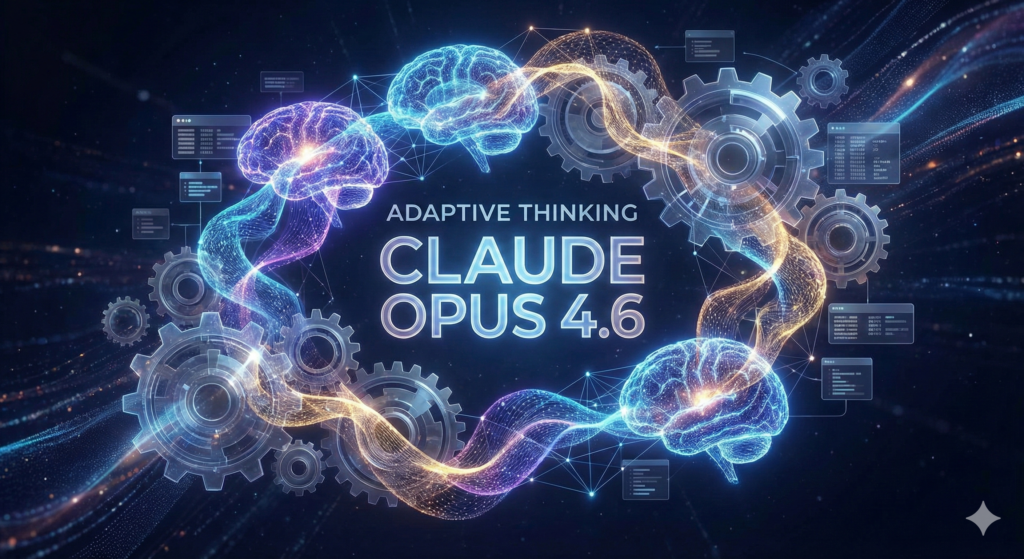
A New Pinnacle in AI: Claude Opus 4.6 and the Era of “Infinite Memory”
The AI world was shaken just two days ago (February 5, 2026) by a massive announcement from Anthropic. The flagship of the Opus series, Claude Opus 4.6 , is finally here. This isn’t just a speed upgrade; it is an architectural leap that fundamentally redefines how AI “thinks” and “remembers.”
Here are the standout features of this new giant and its implications for the tech world:
1. Adaptive Thinking
With Opus 4.6, the era of “manual thinking budgets” is over. Thanks to the new Adaptive Thinking mode, the model automatically analyzes the complexity of any given task and decides how much “deep reasoning” is required. While it provides near-instant answers to simple queries, it can now spend minutes performing background reasoning—much like a human engineer—when solving intricate software bugs.
2. Compaction API: Is “Infinite” Conversation Possible?
The Compaction API, introduced in beta, is a revolution in context management. As conversations grow longer, the model’s memory no longer hits a “full” state. Instead, the system intelligently summarizes previous interactions on the server side (compaction), keeping the context window fresh. This allows Claude to stay by your side in projects lasting weeks without forgetting a single detail.
3. 1 Million Token Context Window
For the first time in the Opus class, a massive 1 million token context window (beta) has been opened. It is now possible to feed an entire code library, hundreds of pages of technical documentation, or a full set of financial reports into the model at once and receive a comprehensive analysis in seconds.
4. Industry Leadership in AI Agency
Opus 4.6 sets a new industry standard for agentic coding and complex search tasks. With its ability to self-debug, create independent sub-tasks, and operate reliably within large-scale codebases, it is evolving from a mere assistant into a truly independent “digital partner.”
The TAO AI LAB Perspective
At TAO AI LAB, we have always advocated for AI that moves beyond “knowing” to “reasoning.” The flexible thinking and memory management capabilities of Claude Opus 4.6 will push our Agentic Workflows to heights we previously only imagined. We are excited to see where these “reasoning” and “remembering” systems will take our autonomous operations. At TAO AI LAB, we are eager to see where these "reasoning" and "remembering" systems will take our autonomous workflows (Agentic Workflows). TAO AI LAB olarak, bu tarz “muhakeme edebilen” ve “hatırlayan” sistemlerin otonom iş akışlarımızı (Agentic Workflows) nereye taşıyacağını görmek için sabırsızlanıyoruz.
What do you think? How would an AI with such vast memory and deep reasoning capabilities transform your current workflow? Let’s discuss in the comments!