How do we define the problem ?
Social loneliness, chronic stress, and anxiety disorders are major mental health issues that are becoming increasingly common, especially during periods of urbanization, digitalization, and economic uncertainty. Increased time spent in digital environments can weaken social relationships while simultaneously associating seeking help with social exclusion.
In recent years, mental health chatbots and digital support applications have begun to partially fill this gap by transferring evidence-based methods such as cognitive behavioral therapy (CBT), mindfulness, and acceptance-based approaches to a digital format.
Tao AI Lab Approach
Tao AI Lab's digital well-being solutions go beyond the traditional "chatbot" concept. Our design principles are:
• Evidence-based psychological framework: CBT, emotion regulation, problem-solving, and behavioral activation-based intervention techniques.
• Daily mood tracking and early warning: Monitoring users' emotional patterns through regular check-ins, short questionnaires, and self-reports.
• Behavioral plans to combat social loneliness: Suggestions for increasing social interaction through small, actionable steps (initiating communication, role-playing, behavioral experiments)
• Human-to-expert bridging role: A hybrid model that can provide summary reports and referrals to a psychologist when needed.
Product Features
Digital companionship and chat
• 24/7 accessibility, text-based or voice interaction as needed.
• Dialogues that are customized according to the user's mood, context, and past sessions.
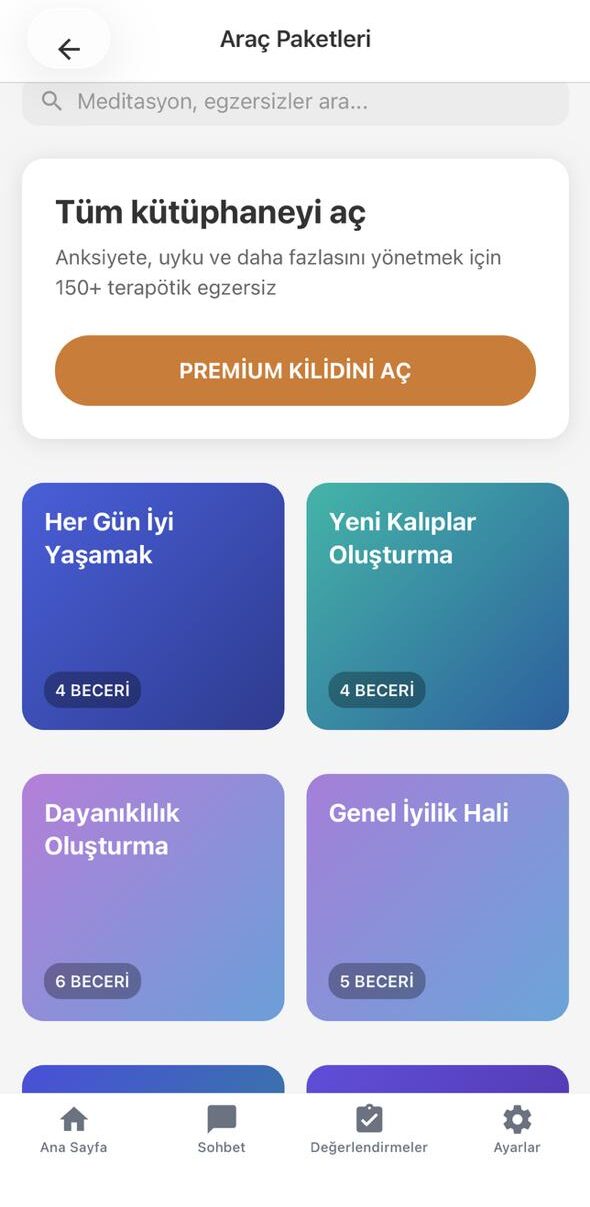
Structured programs and modules
• Step-by-step CBT-based programs for anxiety management (thought recording, cognitive restructuring, relaxation exercises)
• Relationship-building skills and communication practices for social loneliness
• Modules on sleep hygiene, stress management, and work-life balance.
Expert integration (optional)
• Matching users with experts in their field based on their risk profile, scheduling sessions, and monitoring.
• User history, sentiment graphs, and key event summaries for the expert.
Borders, security, and ethics.
• The application evaluates indicators to identify crises and similar high-risk situations and provides guidance accordingly.
• Transparent information and terms of use that clearly state that it does not provide a medical diagnosis and does not replace medical treatment.
• Data minimization, transparent privacy policies, and compliance with relevant regulations (e.g., restrictions in some US states on apps claiming to offer AI therapy)