- Dr. Serdar Özcan
- 1 Comment
- 361 Views
Anthropic's Secret AI Model Mythos Leaked: A New Era in AI or a Cybersecurity Nightmare?
Anthropic's most powerful AI model, "Claude Mythos," was exposed to the public through a configuration error in the company's own content management system. According to Fortune's exclusive report on March 26, 2026, approximately 3,000 unpublished assets became accessible in a publicly searchable data cache. The leak sent shockwaves through the AI industry.
1. What Is Mythos? A Capability Leap Beyond Opus
An Anthropic spokesperson confirmed that Mythos represents "a step change" in AI performance and is "the most capable we've built to date." Internally codenamed "Capybara," the model sits as a new tier above the current flagship Claude Opus 4.6.
According to the draft blog post reviewed by Fortune, Mythos achieves "dramatically higher scores" in software coding, academic reasoning, and cybersecurity tests compared to Opus 4.6. However, this superior performance comes at a significantly higher cost. Anthropic noted the model is "larger and more capable but also more expensive."
2. How Did the Leak Happen? 3,000 Secret Files Exposed
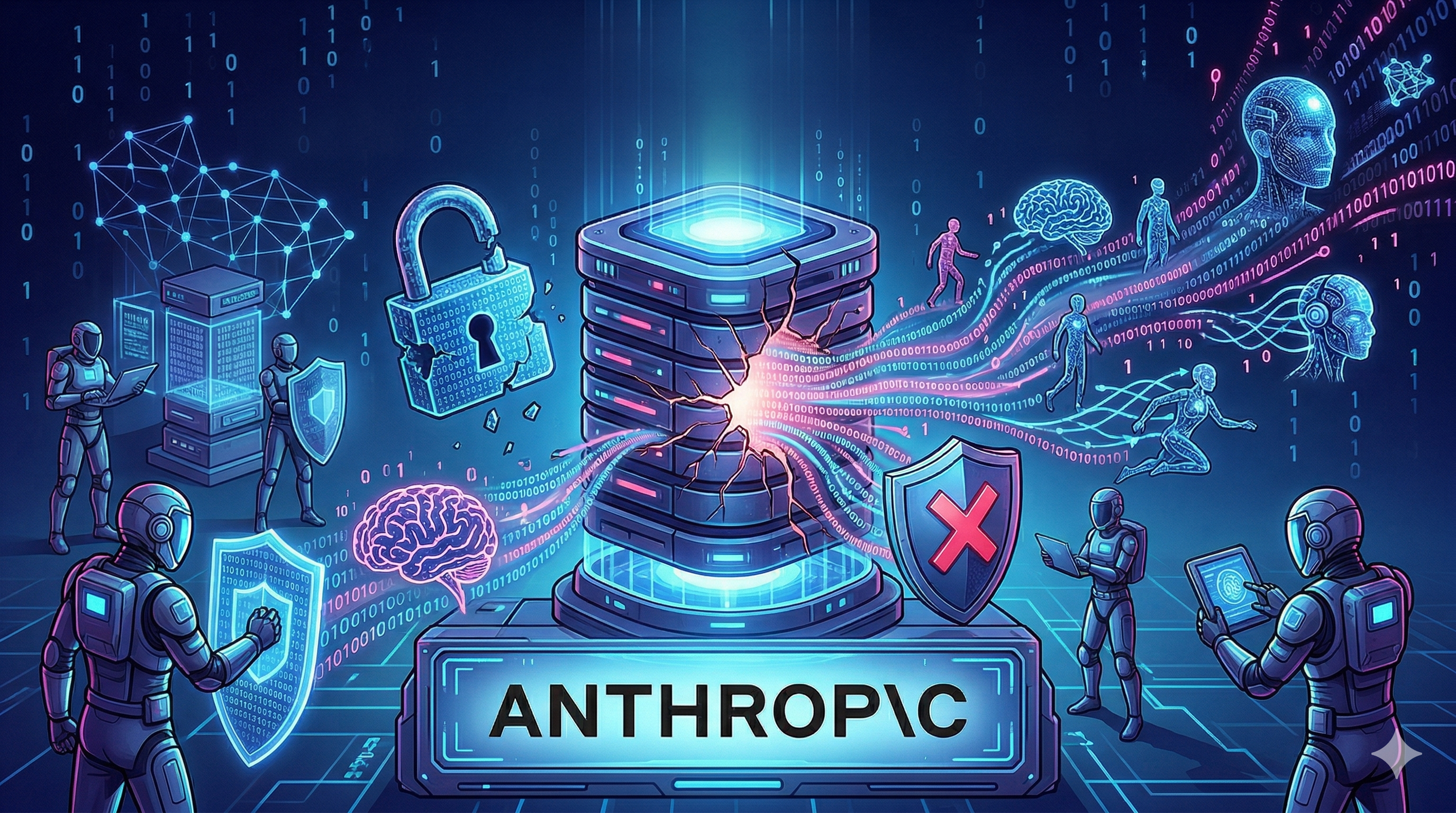
The root cause was described as "human error" in configuring Anthropic's content management system. A misconfiguration in the company's blog platform made unpublished draft posts accessible in a publicly searchable data store.
In total, approximately 3,000 unpublished assets linked to Anthropic's blog became publicly accessible. These included draft blog posts detailing Mythos's capabilities, performance benchmarks, and security assessments. According to CoinDesk's March 27 report, Bitcoin and software stocks declined following the leak's revelation.
3. What Do "Unprecedented Cybersecurity Risks" Mean?
According to Fortune's second report on March 27, Anthropic's leaked draft blog post stated that Mythos poses "unprecedented cybersecurity risks." The model's extraordinary performance on cybersecurity benchmarks is described as a double-edged sword.
On one hand, this capability dramatically improves vulnerability detection when used defensively. On the other hand, in the wrong hands, it carries the potential to design sophisticated cyberattacks. Gartner's 2026 projections estimate that AI-powered cyberattack volume will increase by 300% by 2027. Models like Mythos could exponentially amplify this risk.
4. What Lessons Should We Draw from This Leak?
The Anthropic incident forces AI companies to confront their own security vulnerabilities. The deep irony is that Anthropic — widely known as one of the most safety-focused AI companies in the world — exposed its most confidential project through a basic CMS misconfiguration.
This event raises three critical questions. First, how seriously are AI companies taking their own operational security? Second, as model capabilities increase, can security standards evolve at the same pace? Third, are companies under competitive pressure cutting corners on security?
5. Industry Reactions and Competitive Dynamics
The Mythos leak signals that the AI capability race has entered a new dimension. OpenAI shutting down Sora the same week to focus on its "Spud" model family, Google doubling reasoning performance with Gemini 3.1 Pro, and xAI launching Grok 4.20 with a four-agent system — all point to major players concentrating resources on their most capable models.
According to McKinsey's March 2026 analysis, 72% of Fortune 500 companies are preparing for AI "capability leap" scenarios. Mythos may be the first concrete example translating this scenario from theory to practice.
6. Where Does This Take Us?
The Mythos leak demonstrates that the AI industry stands at a crossroads. On one side, extraordinary capability gains; on the other, the risk of those capabilities becoming uncontrollable. According to IEEE's March 2026 report, AI-related security incidents have increased by 340% over the past 12 months.
The solution is not to completely restrict AI capabilities. With proper oversight mechanisms, transparent reporting, and international security standards, it is possible to channel these capabilities for humanity's benefit. Yet the Anthropic case shows that even the most basic security — protecting your own data — can be neglected.
TAO AI LAB Perspective
At TAO AI LAB, we find Salesforce's move extremely exciting as we develop agentic workflows and autonomous workflows. the Mythos leak teaches us a critical lesson: as the power of reasoning AI systems grows, security layers must strengthen proportionally. The world's most safety-focused AI company exposed its most secret project through a CMS error. This is proof that companies of every scale must question their operational security posture.
Do you think security standards can keep up as AI model capabilities increase? Are "super models" like Mythos an opportunity or a threat for humanity? Share your thoughts in the comments!
Frequently Asked Questions
What is the Anthropic Mythos model?
Claude Mythos (codenamed Capybara) is Anthropic's new AI model positioned above its current flagship Opus 4.6. The company confirmed it represents "a step change" in capabilities.
How did the Mythos leak happen?
A configuration error in Anthropic's content management system made approximately 3,000 unpublished files publicly accessible. The company described it as "human error."
Why does Mythos pose cybersecurity risks?
The model's extraordinary performance on cybersecurity benchmarks means it could be used defensively to detect vulnerabilities, but also offensively to design sophisticated cyberattacks.
When will Mythos be publicly available?
Anthropic confirmed the model is currently being tested with early access customers. No general availability date has been announced.
Sources:
Dr. Serdar Özcan
Temel CMS yapılandırma hataları, varsayılan yönetici kimlik bilgilerinin kullanılması, hata ayıklama modunun açık bırakılması, güncel olmayan eklenti ve temaların kullanılması veya aşırı geniş dosya izinlerinin verilmesi gibi yanlış ayarlardan kaynaklanan güvenlik açıklarıdır. Bu yaygın ihmaller, saldırganların verileri çalmasına, siteleri tahrif etmesine veya uzaktan komutlar yürütmesine olanak tanır.