- Dr. Serdar Özcan
- 0 Comments
- 212 Views
xAI Grok 4.20: The Multi-Agent Revolution Combining Four AI Experts

Elon Musk's xAI has made a bold move in the AI race with Grok 4.20. Instead of relying on a single monolithic model, this system deploys four specialized agents working in concert — a multi-agent architecture that opens an entirely new chapter in artificial intelligence. But why does this matter, and how does it stack up against the competition?
1. Four Expert Agents, One Unified Goal
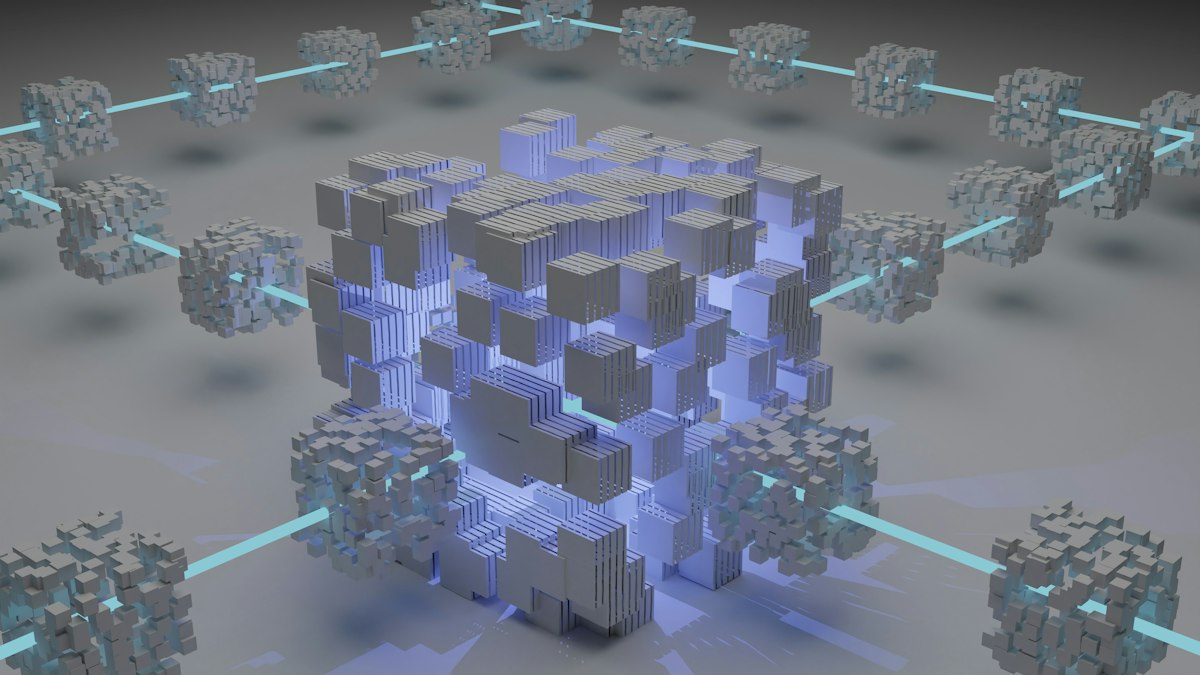
The standout feature of Grok 4.20 is its orchestration of four specialized agents — Grok, Harper, Benjamin, and Lucas — each responsible for a distinct domain: analysis, strategy, data processing, and verification. Rather than forcing a single massive model to handle everything, this architecture leverages collaboration among specialized units to produce more consistent and accurate results.
The approach mirrors how effective human organizations operate. Just as different departments within a company combine their expertise for better outcomes, Grok 4.20 brings the same principle to the AI world.
2. Benchmark Results: Outperforming the Giants
Grok 4.20 surprised many by surpassing both OpenAI's GPT-5 and Google's Gemini 3 Pro on ForecastBench prediction tests. But the truly striking result comes from live stock market competitions, where the system achieved profitability rates between 10% and 34% under real-time market conditions. This provides concrete evidence that the multi-agent approach delivers strong performance not just in theoretical benchmarks but in real-world applications.
3. The SpaceX-xAI Merger and Grok Imagine API
This launch carries additional strategic weight as the first major product announcement following SpaceX's acquisition of xAI. The convergence of Musk's space and artificial intelligence visions under a single roof could generate synergies spanning autonomous space operations to industrial applications.
The newly introduced Grok Imagine API extends capabilities beyond text generation, offering video and audio production. This gives developers a powerful toolkit for creating multi-media content at scale.
4. The Future of Multi-Agent Architectures
Grok 4.20's multi-agent approach reflects a broader industry trend. Instead of relying on ever-larger standalone models, the collaboration of specialized agents that monitor and complement each other offers significant advantages in both accuracy and reliability. This architecture holds the potential to reduce hallucination rates and improve consistency on complex tasks.
Critics note, however, that coordinating multiple agents may introduce latency and cost challenges. How this balance plays out in widespread real-world deployment will become clearer in the coming months.
The TAO AI LAB Perspective
At TAO AI LAB, we have always advocated for AI that moves beyond "knowing" to "reasoning." Grok 4.20's multi-agent architecture aligns precisely with this vision. Rather than a single model bearing the entire burden, specialized agents collaborating through autonomous workflows — the "agentic workflows" approach — represents one of the most powerful paths toward AI becoming a true digital partner. Context-aware, individually tailored, and reasoning-capable AI systems are no longer a future promise; they are becoming today's reality.
Do you think multi-agent architectures will completely overtake the single large model approach? Or will both coexist? Share your thoughts in the comments!
Sources: